Beginner
60 Days of Daily Updates on WeChat Official Account: Earned 10k+, Gained 9k+ Followers, 6 Posts with 100k+ Views. Full Process Revealed.
60 days of daily updates on a WeChat Official Account, earning over 10,000 RMB, gaining over 9,000 followers, with 6 posts exceeding 100,000 views. The full process is disclosed.
60 Days of Daily Updates on WeChat Official Account: Earned 10k+, Gained 9k+ Followers, 6 Posts with 100k+ Views. Full Process Revealed.#
Starting from November 9, 2025, when I finalized the direction, to today marks two full months of daily updates. The WeChat Official Account has achieved good results. This article is a review, about five thousand words long. Welcome to read.
Article Data: Updated about 60 articles. 6 articles with 100k+ views, about 30 articles with 10k-100k views. The remaining articles also have view counts mostly above 5,000. The readership far exceeds my follower count.
Earnings: Total earnings over ten thousand RMB; over 7,000 RMB from the WeChat Ad Platform (WeChat Traffic Master), 2,000 RMB in the first month, 5,000 RMB in the second month, plus 2 AI product advertisements.
Follower Growth: Started with 1,343 followers when beginning daily updates. Now total followers are 10,413, a net gain of over nine thousand.
OK, the above is the data situation after two months of daily updates. Below is a detailed introduction, including but not limited to: direction determination, content topic selection, catering to the algorithm, stable updates, and advertising deals.
01 Exploration Period#
I decided to operate a WeChat Official Account starting October 18th, so I began updating frequently. The content was quite varied, revolving around my research, study, and life.

During the update process, I found two types of my content were more likely to get recommended:
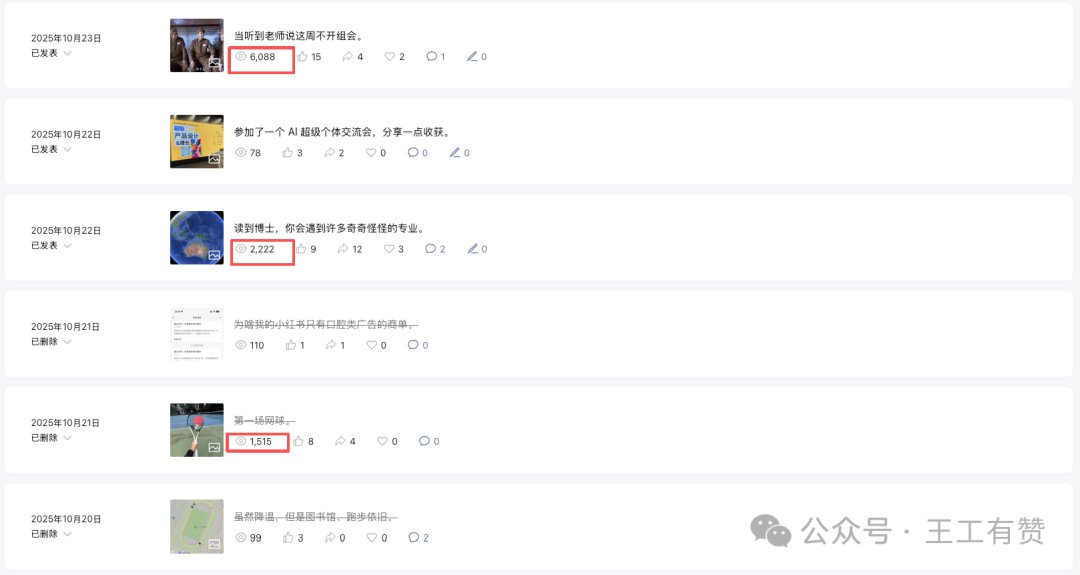
One was the fitness type: Even simple workout check-ins got far more traffic than other types.
The other was the general graduate student category: Topics every graduate student encounters, mainly related to research life.
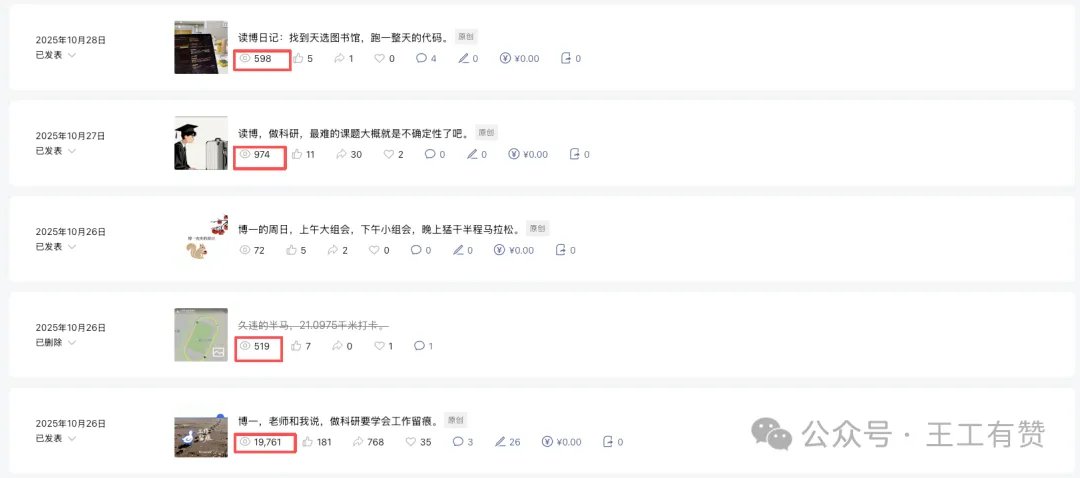
I faced a choice. Writing too broadly wasn't working; I needed to niche down. Through early exploration, I had found two traffic entry points. So which one to choose?
After analysis, I decided on the latter. If I chose the fitness category, I would need to maintain workout check-ins, which is tiring, and the content wouldn't be enough to support long-term updates.
Choosing the general graduate student category meant a wide enough audience coverage, plenty of topic ideas, fully capable of supporting my future updates without worrying about running out of material.
02 Messy Topic Selection#
When I first started updating, all content was my source. Since it was the broad graduate student category, not niche to a specific direction but to a demographic, there was a lot I could write about.
Psychology, teacher-student relationships, personal growth, financial education, socializing, time management, interpersonal relationships, emotional management, efficiency improvement...

You can see, it's essentially shooting the arrow first and then drawing the target. Almost any content can be adapted to fit graduate students. Nothing is off-limits.
But this had a problem: traffic was very unstable. I couldn't predict the data; I only knew after publishing.
Fortunately, the direction was right, and the topics were OK. Although a few articles flopped, the overall performance was quite good.
I updated with random topics like this for about half a month. During this time, I realized the key to getting recommendations and finally determined the direction for content updates.
03 Fully Embracing the Recommendation Algorithm#
How can WeChat Official Account articles get recommended? The common saying online is it's mysterious, uncertain, nobody knows.
If you search, you'll find advice like original content, good topics, scarce content, valuable... useful but ultimately unhelpful suggestions.
Or there's clickbait titles, marketing account tactics, but these are hard to master and still feel like a mystery.
OK, think about a question: Do we need to consider improving user open rates and increasing user dwell time?
Yes, but it's not the key. When we have few followers, not many people are watching anyway, so focusing on this isn't very useful.
What's the core? Getting the recommendation algorithm to notice us and recommend our articles. When the follower base is small, getting algorithm recommendations is the only solution.
But here's the problem: the recommendation algorithm is a black box. We don't know what kind of articles get recommended. Is there a reference answer?
Obviously, yes!!!
The articles WeChat recommends to us daily, the viral articles appearing in the "Search" section, are our reference answers.
These articles have been verified by the algorithm, articles that will be recommended. They are the reference answers, or rather, the standard answers.
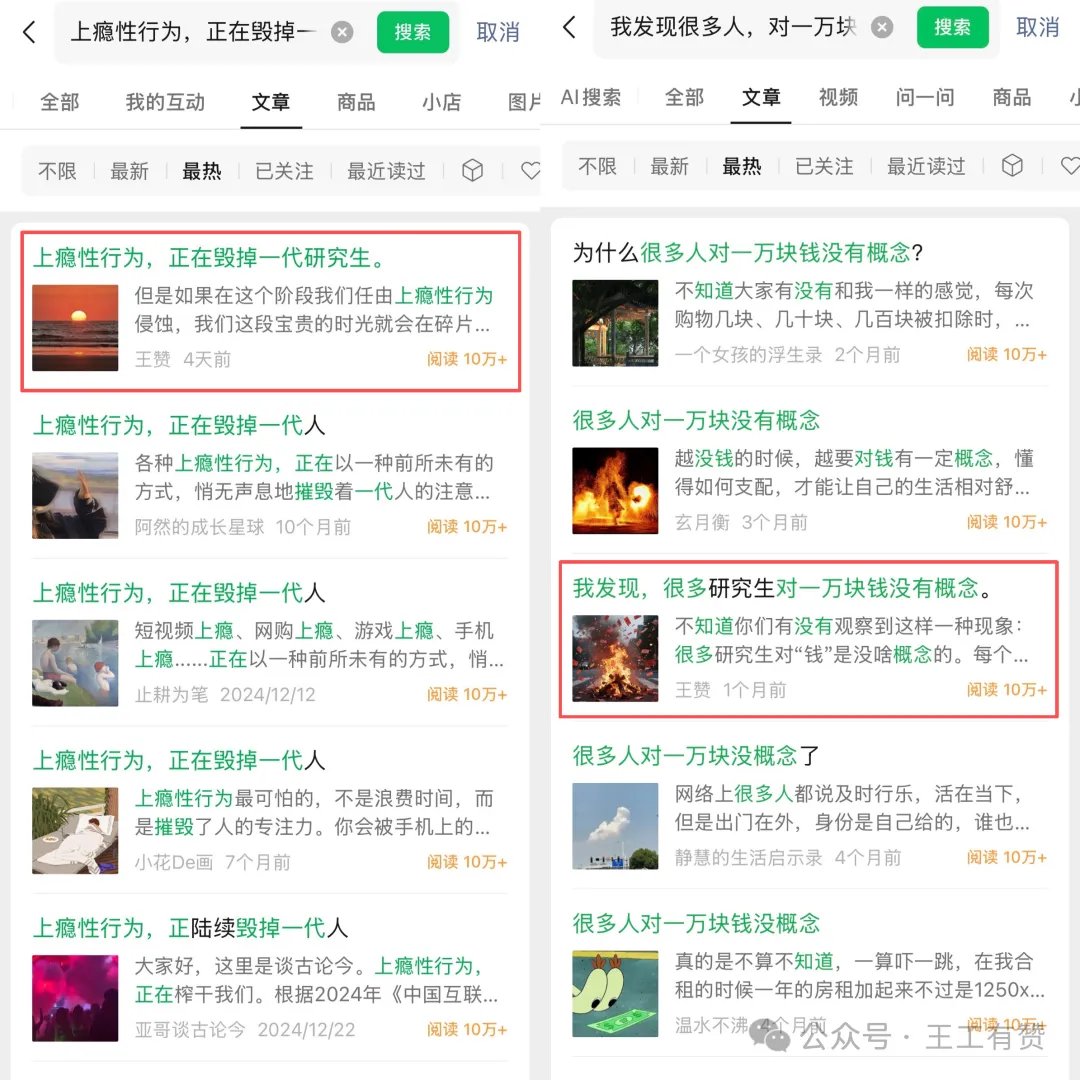
For example, in the image below, the top article is one I published a few days ago, and this topic came from even older articles.

You can see this topic already has many 100k+ articles. Content that was popular will be popular again. Viral content will go viral repeatedly because they are the answers given by the recommendation algorithm.
We don't know how the recommendation algorithm works, but we know its output. The hundreds of thousands of articles on WeChat Official Accounts are the reference answers.
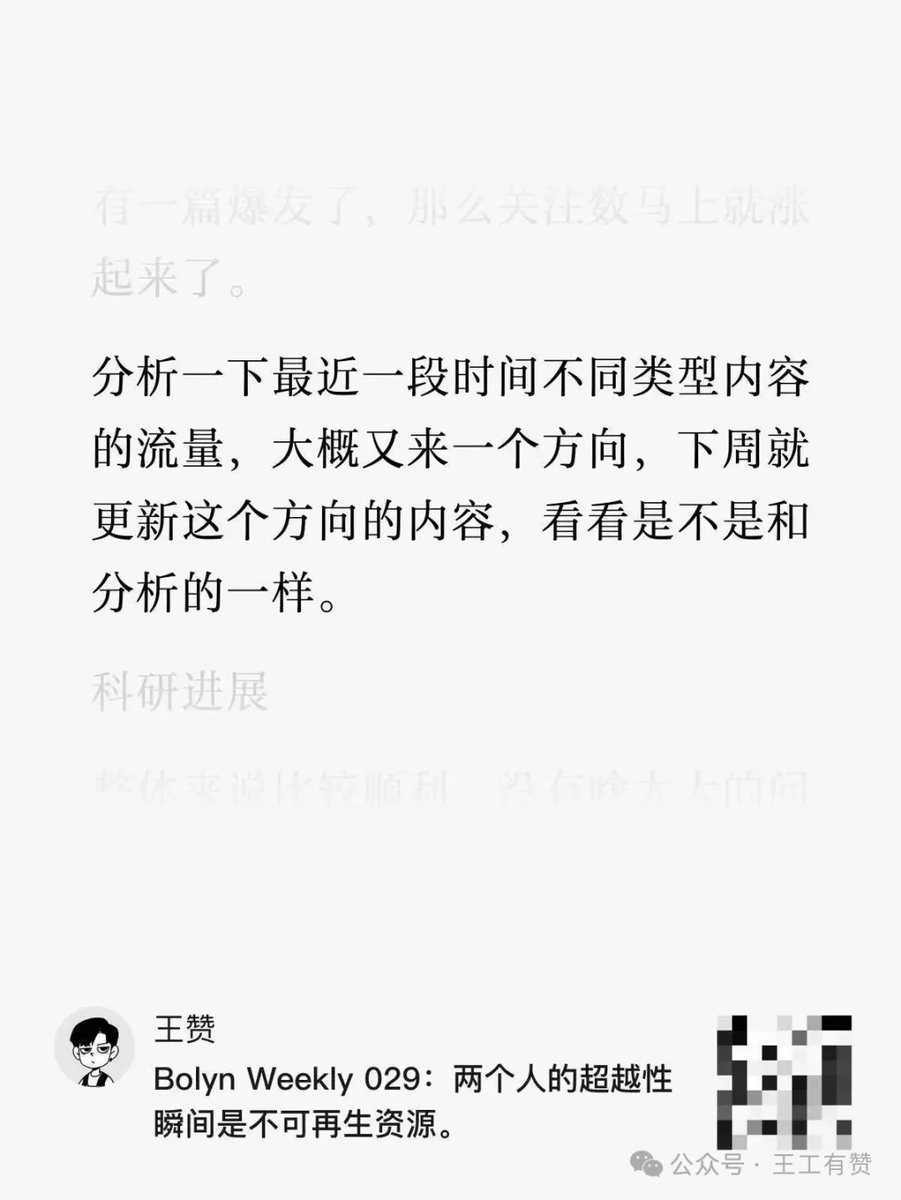
We just need to find those viral articles, change the angle to apply the article to the demographic I write for, and there's a high probability this article will get recommended.
Through this method, the recommendation algorithm becomes semi-transparent to me. We don't need to crack the algorithm; we just need to find its output and align our creation with that output.
I just need to find viral articles from various fields, then write on that topic from a graduate student's perspective, adding graduate student elements to the title. Then this article has a high probability of being recommended.
Before, publishing articles was pure guesswork, recommendation was a mystery. But after fully embracing traffic, I no longer have data anxiety because I know the article will definitely be recommended. If not this one, the next one will.

This chart shows the daily readership over two months. You can see, early on it was high and low, unstable. But since mid-December, daily readership has basically been above 60,000.
As readership steadily increased, the daily WeChat Ad Platform earnings also increased. If you look closely, you can see three stages in the ad revenue.
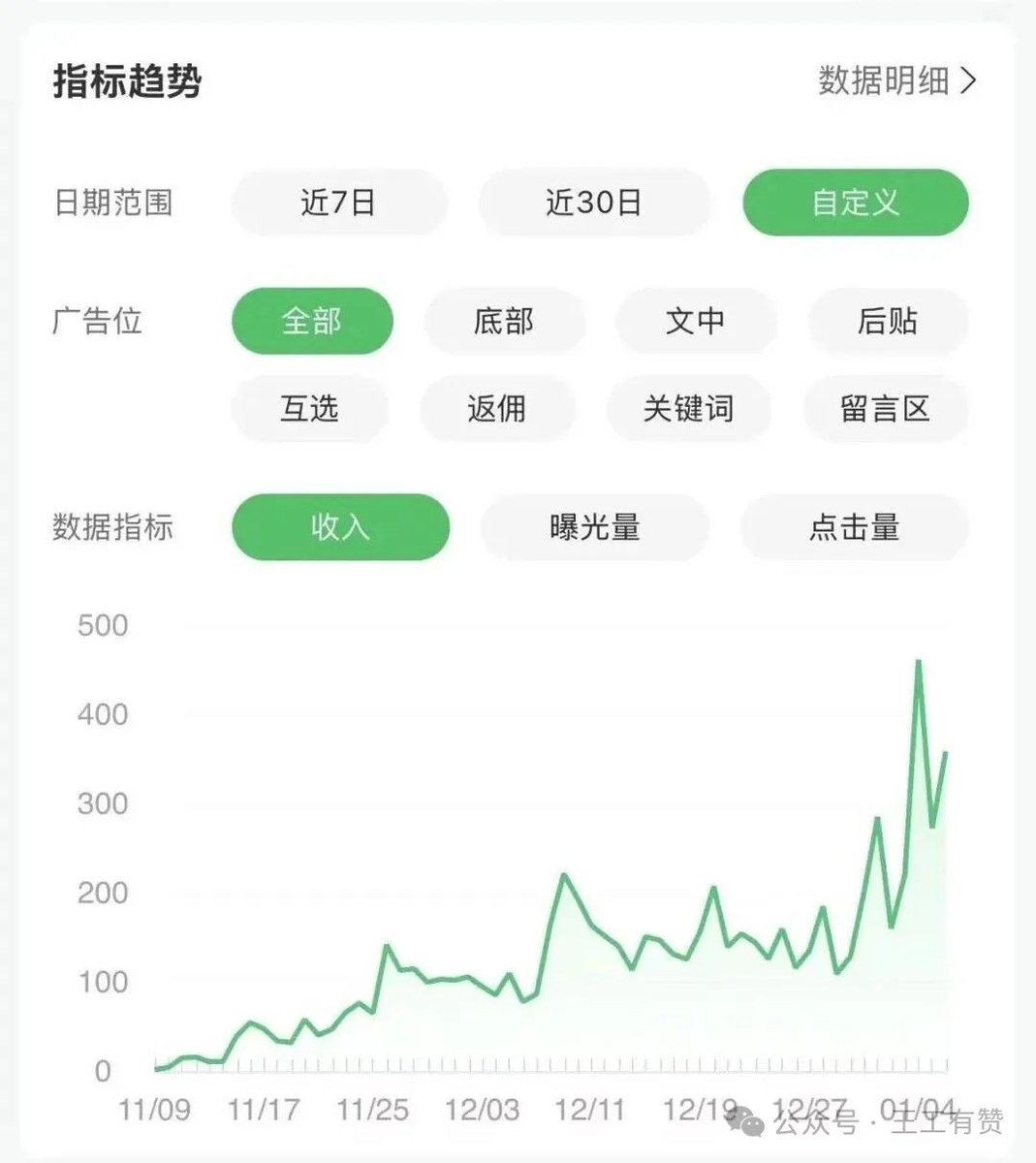
Stage 1: November 9 to November 25. My topics were very broad during this stage, writing about anything, just fitting it into the graduate student theme.
Stage 2: November 25 to December 5. My articles began to embrace the recommendation algorithm, but I still wrote some articles based on my own ideas.
Stage 3: After December 10. My topic selection fully embraced the recommendation algorithm, fully embraced traffic. And at this point, I completely stopped worrying about the data.
OK, the above is the analysis of writing viral articles and recommendation traffic for this WeChat Official Account. In old terms:
What has been will be again, what has been done will be done again. Don't think about what articles will be recommended; go see what articles have already been recommended.
04 How to Increase WeChat Ad Platform Earnings#
The core mentioned earlier was all about data, mainly increasing readership. But there's another approach: increasing eCPM (effective cost per mille), the earnings per thousand impressions.
With the same readership, the higher the eCPM, the higher your ad platform earnings.
eCPM is mainly related to the content's field. For example, below are my two official accounts: one is graduate student education, the other is AI, internet, technology.
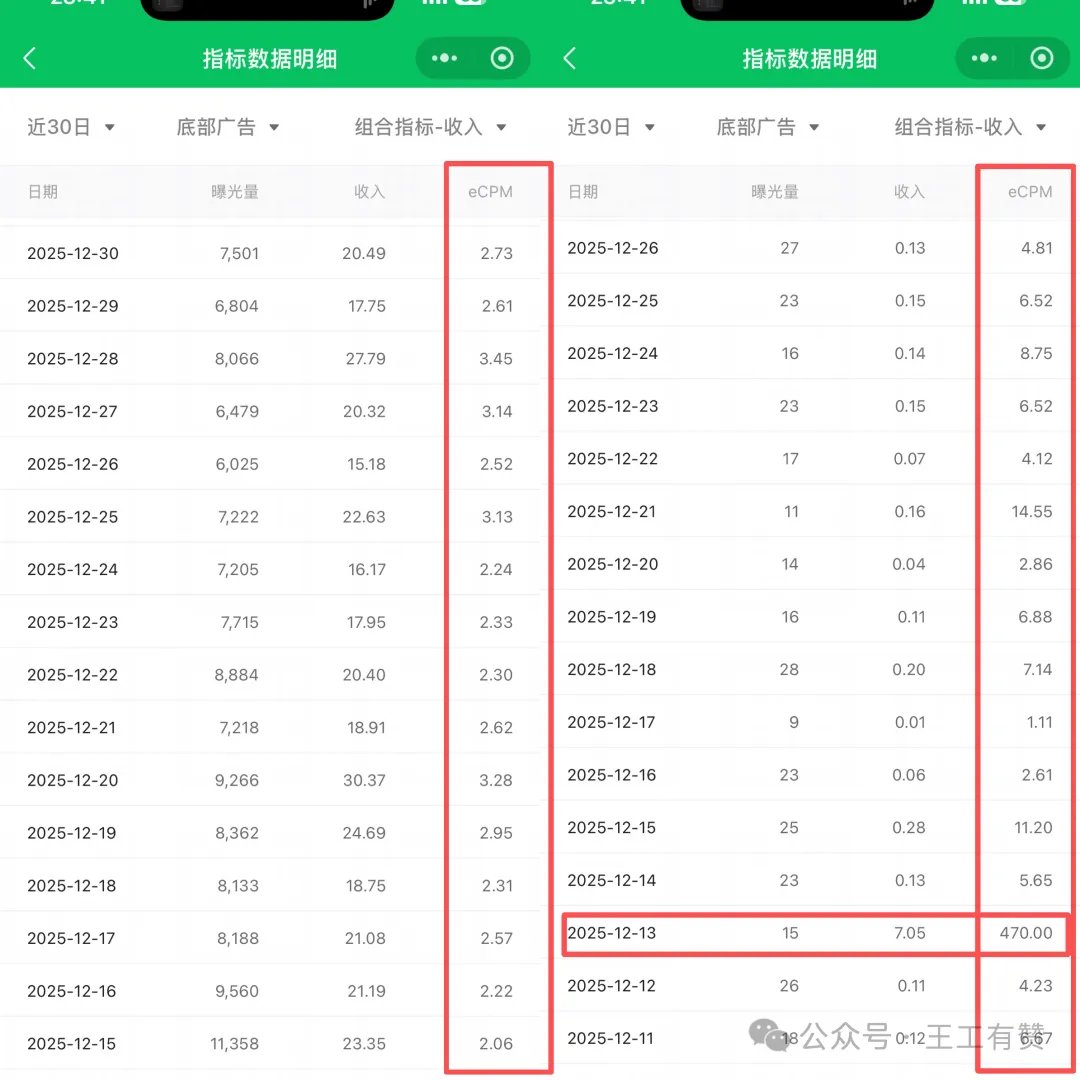
The latter's eCPM is clearly higher than the former. We also observe an outlier: December 13th, where the eCPM was as high as 470, with 15 exposures earning 7 RMB in ad revenue.
If you can find a field with high eCPM, even with low readership, the article's ad revenue can be high.
However, compared to increasing readership, increasing eCPM is even more mysterious. This might only suit those running account matrices, who have many accounts to test.
Or if you happen to discover a "bug," find a high-eCPM field, and can also consume all the traffic in that field, that's also impressive.
05 Improving Content Creation Efficiency#
Through the previous method of fully embracing the recommendation algorithm, if we want to find a topic, it can be determined in about ten minutes. Next is using others' stones to polish our own jade.
I chose to use AI. All viral articles I uniformly modify with AI. No complex prompts: "Below I give you an article, please analyze and deconstruct it, and write a graduate student version for me."
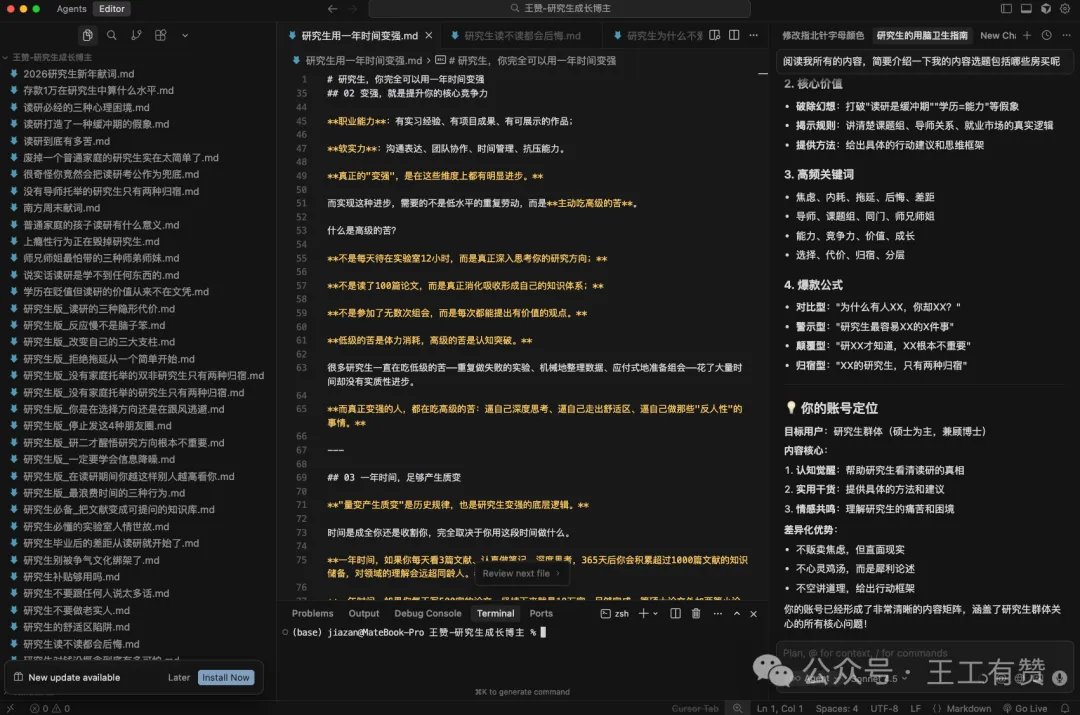
Then I get a structurally complete article. Then I manually adjust some expressions, output it in my own language, and simultaneously reduce the AI detection rate.
My method is actually very inefficient. One and a half hours a day, repeating the same thing. Later, it became purely manual labor.
But spending this time, earning two to three hundred RMB daily from ad revenue, plus having an official account with good data performance, made it worth doing.
06 About Article AI Detection Rate#
The most controversial point in AI-assisted creation is: Will articles written by AI be throttled (limited in distribution)?
First, my observation: No, because I've seen articles with 100% AI detection rate still get recommended by the system.
So can we write entirely with AI? Not recommended, because the number of accounts is limited; one person can only register one WeChat Official Account.
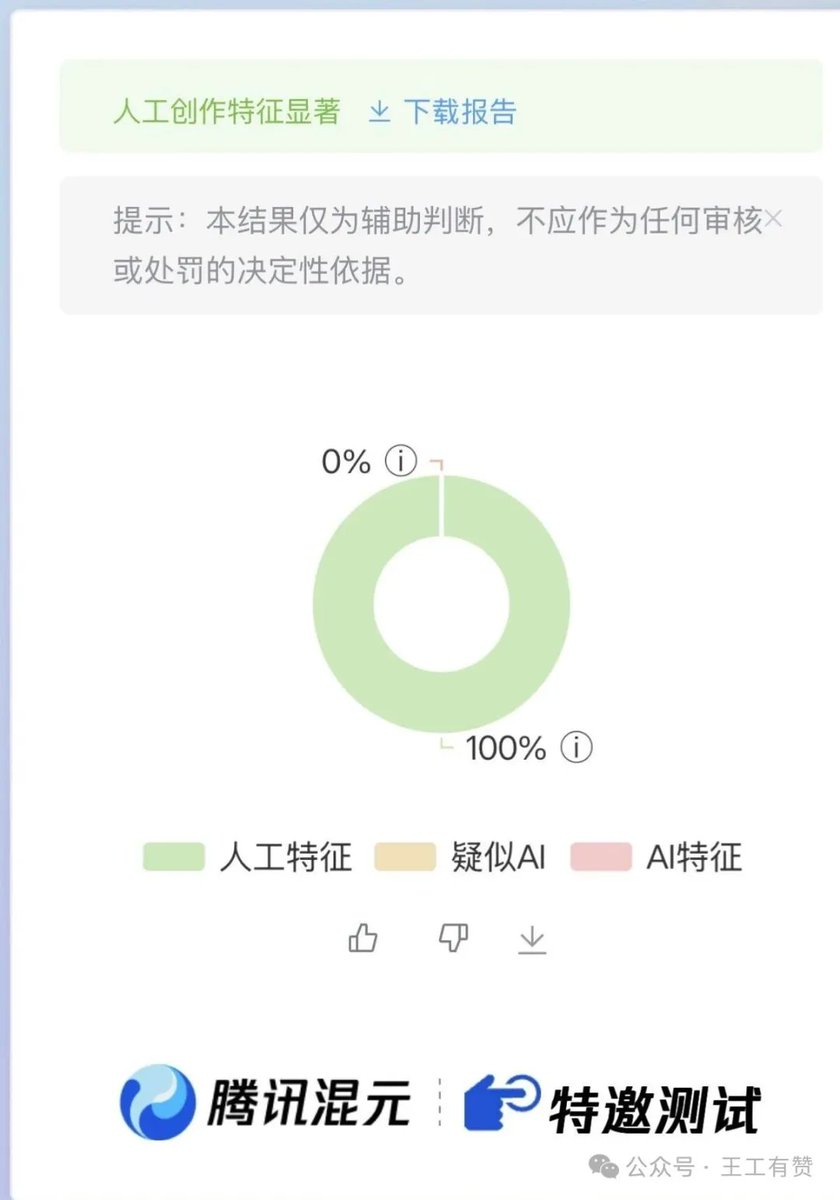
Pure AI writing itself carries risks. You never know when Tencent might ban your account. From a long-term perspective, ensuring a low AI detection rate is definitely better.
So who is suitable for pure AI writing? Those running matrices, with many accounts, planning to cash in and leave.
This type uses quantity to test. If no ad revenue, abandon; if there is ad revenue, increase investment, eat a wave of ad revenue and leave.
It doesn't matter if accounts get banned; just deregister or find new accounts. Only this type of person is suitable for pure AI writing.
But for the vast majority, they don't have the time, energy, or ability for this. So I recommend a more conservative strategy.
One IP account, one traffic account. The IP account is purely long-term, outputting oneself. The traffic account fully embraces the recommendation algorithm.
For example, I have two accounts:
Wang Zan: Fully embraces traffic, uses AI, updates daily with articles in the graduate student field, earns daily ad revenue, occasionally takes ads.
Wang Gong You Zan: IP account. This account outputs around myself, what I do, building a personal IP, increasing influence.
Two accounts, dual-track parallel. The traffic account shows muscle, shows data results. The IP account outputs the implementation process, builds influence.
07 Official Account Operation: Recommendation Traffic#
For those running WeChat Official Accounts, they definitely want to earn ad revenue, with article readership as high as possible.
But the problem is, some people's fields rarely produce viral hits. If you say you're a genius, then I don't think you'd be reading this article.
If you want to persist in your field with an official account, you can search and see the data performance of articles in your field.
Research how friendly the recommendation algorithm is to content in your field. If all are thousands or hundreds of views, 10k+ is rare, 100k+ nonexistent.
In this case, what makes you think you'll get the algorithm's favor?
Many people come to me with accounts in low-probability viral fields asking how to possibly go viral. I can't answer their question, or rather, this isn't even a problem.
Many things are probability issues, high or low probability, nothing is 100%. WeChat Official Account recommendation traffic is a low-probability event; not being recommended is the norm.
If you want to get recommended, there are basically two paths. Either you try those fields prone to virality, after all, there are many viral examples to reference.
Or you find a sufficiently niche, vertical field, become the top in that field, and consume all its traffic.
Both paths above have references. I've shared many examples of viral niche small accounts. Finding what suits you allows you to go further.
08 Official Account Operation: Search Traffic#
Above discussed recommendation traffic, but there's another very important traffic source: search traffic.
WeChat has "Search," with countless people daily searching for solutions. Recommendation traffic is mysterious, but search traffic isn't.
From October 2023 to 2025, I updated daily for over a hundred days, wrote over 140 articles, each with only a few hundred views.
From a data perspective, very unsuccessful. But why could I keep updating daily? The key was I had backend monetization products.
All users coming from search were very targeted. They came to me with problems needing solutions, and I happened to provide solutions.

So article readership wasn't high, but the long-tail effect was good, backend monetization was decent. This ensured stable income, which ensured stable updates.
What does this mean? If you have stable monetization products, an official account is still good, backed by WeChat's massive user base.
Or if you don't care about monetization from the official account, just want to build long-term influence, then I highly recommend an official account.
As long as WeChat doesn't fall, official accounts won't die. Official accounts will always be a platform worth doing.
As for how much time and effort to spend, what strategy to use, it depends on your goal. What do you really want?
09 Should the Account Be Niche?#
After fully embracing traffic and abandoning personal narrative, I faced another choice: audience persona. Should I continue adding the keyword "graduate student"?
Because my content is actually suitable for everyone. It's not inherently targeted at graduate students; it's just shooting the arrow first and drawing the target.
I could also replace "graduate student" with "university student," "working professional," "parent." These are all possible.
If I didn't segment the audience, perhaps my articles could get even more readership, better data performance, higher ad revenue.
But ultimately, I gave up. I kept adding "graduate student" to every article for three reasons:
First, not adding "graduate student" would have limited benefit to my article readership. My readership is already high; increasing a bit more doesn't make much difference.
Second, I didn't want the account audience to be too broad. I am a graduate student myself. Later, if monetizing, it would inevitably revolve around the graduate student group. If too broad, I wouldn't even know how to create products.
People buy your product because of a problem. Although not only graduate students encounter these problems, pain points are certainly more concentrated within a specific demographic.
Third, I wanted to take ads. I thought about a question: Why would advertisers be willing to place ads with you? Two situations.
Either you focus on a specific field, your followers are interested in that field, and the product happens to solve common problems in that field.
This is from a content verticality perspective. But my content isn't vertical, so I could only do the second type.
My followers all share a certain identity label. For example, "graduate student" is a strong label.
People with this label encounter some common problems. The advertiser's product happens to solve problems for this audience persona.
Essentially, the two approaches I mentioned: either user vertical or content vertical.
User vertical creates content based on the follower demographic. Content is broad, but uses methods to filter out irrelevant people.
Content vertical deeply cultivates a specific field. Users follow you because your content solves their problems, but users come from various backgrounds.
The result proved my choice right. Several advertisers approached, mainly focusing on research tutoring, efficiency tools, AI tools.
They came to me because of the graduate student demographic. If I had opened up content creation without using "graduate student" as a filter, traffic might have been better, but I likely wouldn't have gotten those deals.
Returning to account operation and content creation, which to choose between user vertical and content vertical? It still depends on the content.
If your content is strongly technical, strongly field-related, like AI video, AI programming, then deeply cultivate that field.
Users will find you because of the problems you solve. Users may be diverse, but their reason for following you is consistent.
If your content is relatively broad, like strongly emotional articles, then it's recommended to filter the audience somehow.
We're not here for a quick cash grab; we're doing something long-term. Filter users through keywords, occupy their mindshare through keywords.
This way, even if short-term traffic might decrease a bit, long-term it's beneficial because your audience is clear, you can create products more accurately, better utilize your existing traffic.
Users definitely pay to solve a problem. Not because I added "graduate student" they pay, only because I can solve their problem.
But not only graduate students encounter this problem; it's just more common among them. Through early filtering, we can better utilize accumulated traffic.
10 Official Account Operation Column#
Alright, having said so much, my core view on official account operation is: you must do an official account.
While sharing about official accounts, many people consulted me on operation methods and strategies.
I usually suggest asking on public platforms. Public